Editorial teams have plenty to assess before a manuscript reaches peer review. Does it belong in this journal? Do its references raise concerns? What deserves a closer look?
The latest improvements to Hum’s Alchemist Review help editors work through those questions faster.
Journal Fit: understand the recommendation
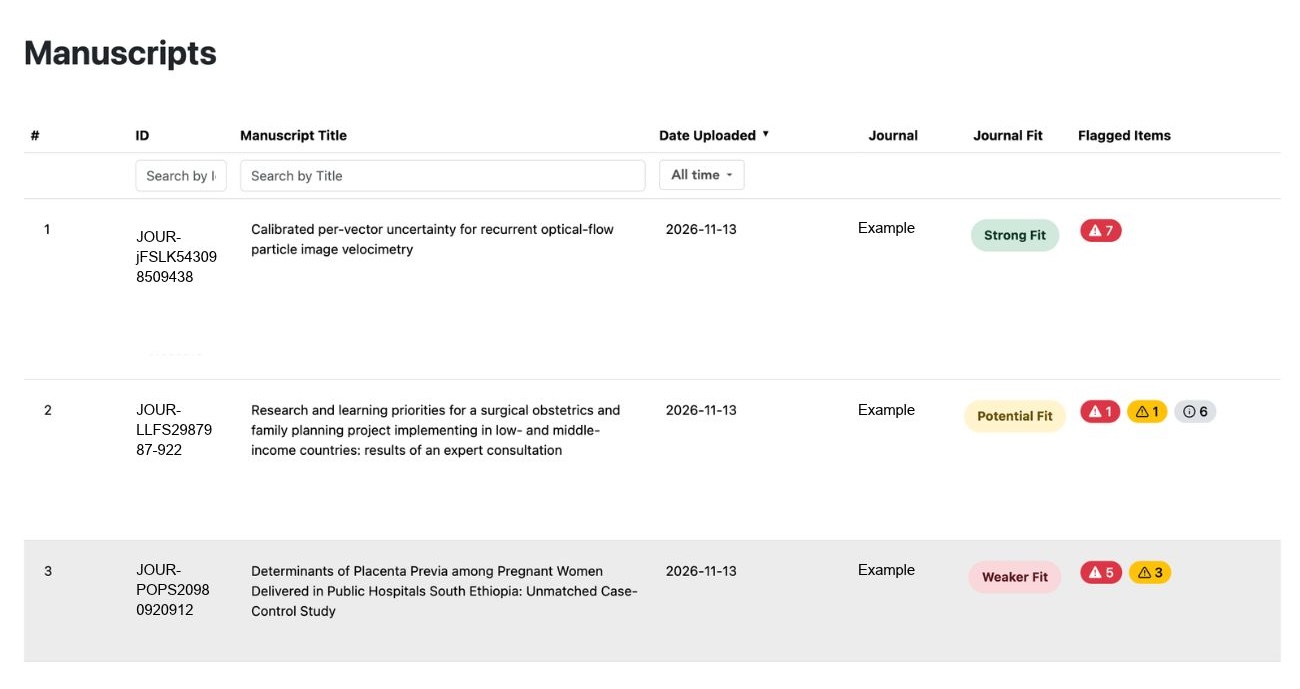
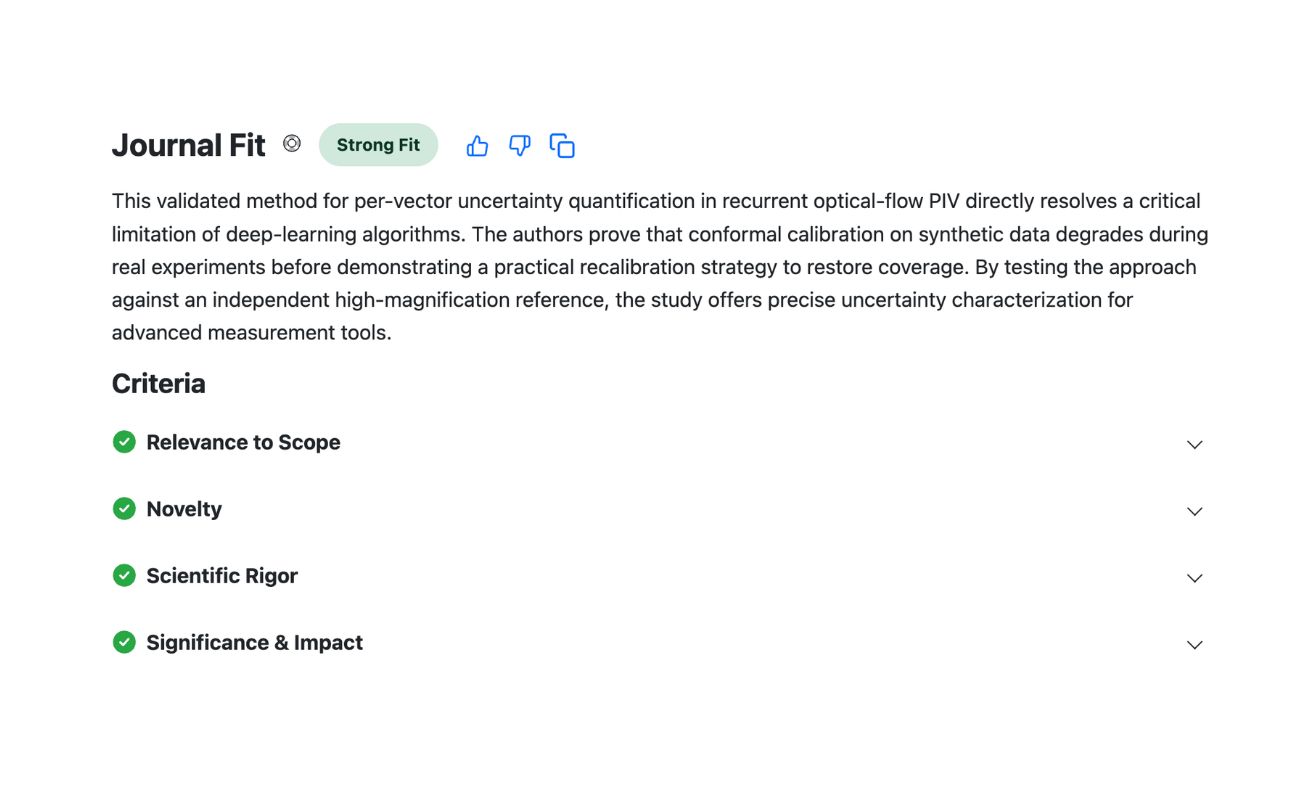
A manuscript can cover the right subject and still fall outside what a journal publishes. Updated Journal Fit assessments use richer journal profiles to consider a submission against the journal’s scope, purpose and expectations.
Editors get a clear fit recommendation with reasoning they can examine. This means less time spent piecing together separate scores and a more useful starting point for deciding whether a submission deserves further consideration.
The assessment draws on the journal’s own profile, including its aims, scope, accepted article types and editorial guidance. Where a manuscript falls short, editors can see whether the issue is a mismatch with scope, a question about the contribution, or a concern about the evidence presented.
For teams working across a portfolio, journal-specific context matters. Journals in the same field may have different expectations about the types of research they publish, its significance or its contribution to the literature. Bringing those distinctions into the assessment helps editors understand why a manuscript may suit one journal better than another.
Reference overviews: see what needs attention
A list of flagged references can leave editors with another task: figuring out what the findings mean together.
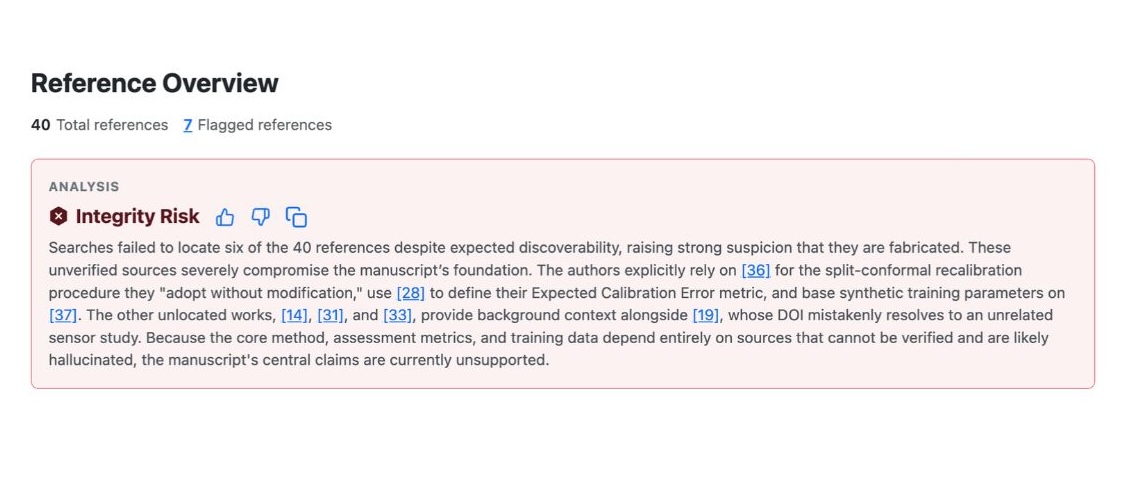
New Reference overview summaries bring those findings into an explained overview, with supporting links for closer investigation. The overview considers the number and type of findings alongside the manuscript’s full reference list, helping distinguish a small number of isolated citation problems from a pattern that needs further checking. Editors can then open the linked references and underlying checks before deciding whether to contact the author or take other action.
Refined reference analysis also considers why a source might be difficult to verify. An older book and a recent journal article leave different trails; an unsuccessful lookup needs context before anyone draws a conclusion.
That distinction helps ethics teams and editors focus their follow-up. A hard-to-locate source may call for a different response from a pattern of recent references that cannot be substantiated. The overview explains the concerns so editors can decide what needs investigation and examine the supporting evidence.
Together, these improvements help editors make faster, more confident triage decisions.
Want to stay in the loop about future product improvements? Follow along on LinkedIn.